
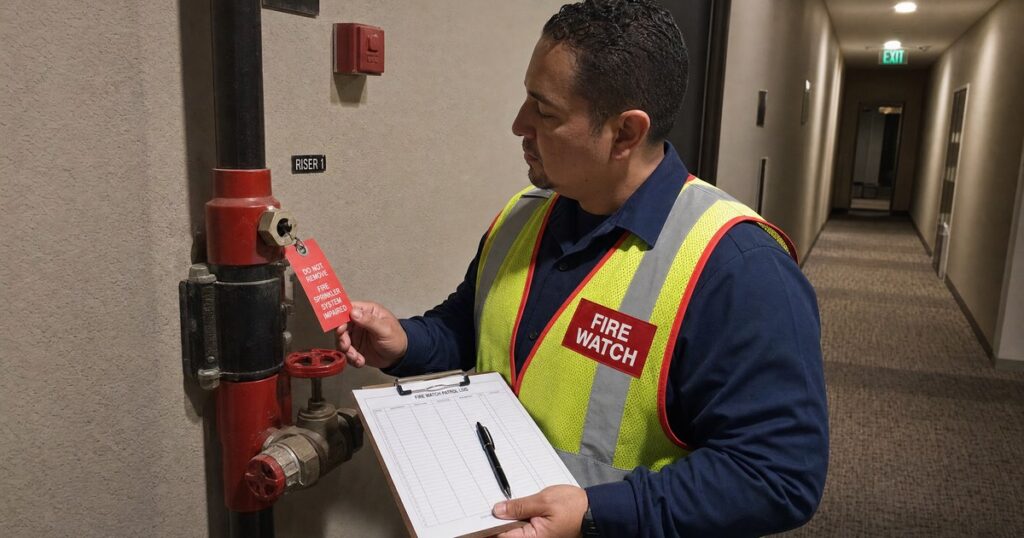

When a sprinkler or fire alarm system goes offline, a building loses its automatic protection, and the quality of the fire watch that replaces it gets set during onboarding. Guards need accurate building information, a defined patrol scope and clear communication lines before they walk the property. Owners who ask pointed questions at this stage are in a stronger position to manage the exposure from the first shift onward.
Confirm when the watch has to start
The trigger for a fire watch depends on which systems are affected, how long repairs are expected to take, and what the local fire authority directs for the site. Owners should plan coverage around the impairment itself, since repair delays and parts orders routinely stretch past a single day and no standard window applies.
The first question for any provider is response time: how many hours pass between the call and a guard walking the floor. The second is notification. Who contacts the fire marshal about the impairment, and how does the provider record the outage start time? Insurers and investigators read the log against that time.
Ask also about scope. A partial impairment may only require coverage of the affected zone, while a full system outage usually means the entire facility, and the answer changes the staffing quote.
Ask how guards learn the building
A fire watch is only as good as the guard’s knowledge of the floor plan. During onboarding, ask whether a supervisor walks the patrol routes before the first shift begins, and whether those routes are mapped to cover every impaired area of the facility. Routes should be written down and timed, with adjustments for locked areas and construction zones.
Site familiarization has to go further than hallways. Guards need the location of utility shut-offs, hazardous material storage, alarm panels, and emergency exits before their first round. If hot work is planned anywhere in the building, ask how the provider handles hot work permit oversight and whether a dedicated guard is assigned to it.
The last question in this group covers shift handover. Incoming guards should receive a written site sheet and a pass-down of hazards found on the previous shift. A verbal summary at the door is not enough.
Check the provider’s local code knowledge
Every municipality sets its own expectations for fire watch, and the authority having jurisdiction (AHJ) – usually the local fire marshal – approves the plan, the patrol frequency, the log format, and the notification steps. A provider working across many jurisdictions shouldn’t have to look up the local requirements for your building. Ask whether the provider will supply a written fire watch plan for the AHJ to review, and who signs it.
Owners comparing providers city by city can look at local pages such as fastfirewatchguards.com/pennsylvania/philadelphia/ while drafting their own list of questions. Useful questions include how a candidate shares local code requirements and site directions with the guards assigned to a building, and how that information reaches the first shift.
Pin down the logbook standard
The fire watch logbook is the working record of the watch: patrol times, routes walked, the names of the guards on shift, observations made, and any follow-up taken. Kept consistently, it gives building managers a clear account for internal reviews and gives outside reviewers, such as inspectors or insurers, a reliable picture of what happened on site.
Ask to see a sample log page before the contract is signed. Entries should show patrol intervals, route confirmations, the guard’s name, and specific observations. The provider should explain where the log is kept, who receives copies, how long records are retained, and what happens if a page is lost.
Agree before work starts on who receives copies of the log and on what schedule, whether that is the property manager, the fire marshal, or an insurer. Records should stay retrievable after the watch ends, so that questions raised weeks later about a specific shift can be answered from the file.
Set the contacts and the operating plan
Onboarding should produce a written contact list before the first patrol: the guard, the provider’s supervisor, building management, and the local emergency dispatch number. What does the guard do first on finding smoke? The emergency response protocol should put the call to emergency services ahead of any call to the property office.
Then ask how the watch fits around daily business operations. Patrols have to continue through deliveries and tenant traffic, and the provider should explain how it handles access after the building closes. Patrols that pause for lobby traffic leave the building uncovered.
Workplace safety rules on emergency action plans still apply while systems are down. Employees should know a watch is in place and how an alarm will be raised without the automatic system.
Where the fire official allows the building to stay open while the suppression system is repaired, a well-briefed team helps the watch run as that official directs.
Put these questions in writing now, before a system goes down. An owner with a prepared list can have guards briefed, routes mapped, contacts confirmed, and the fire marshal notified before coverage needs to begin.