
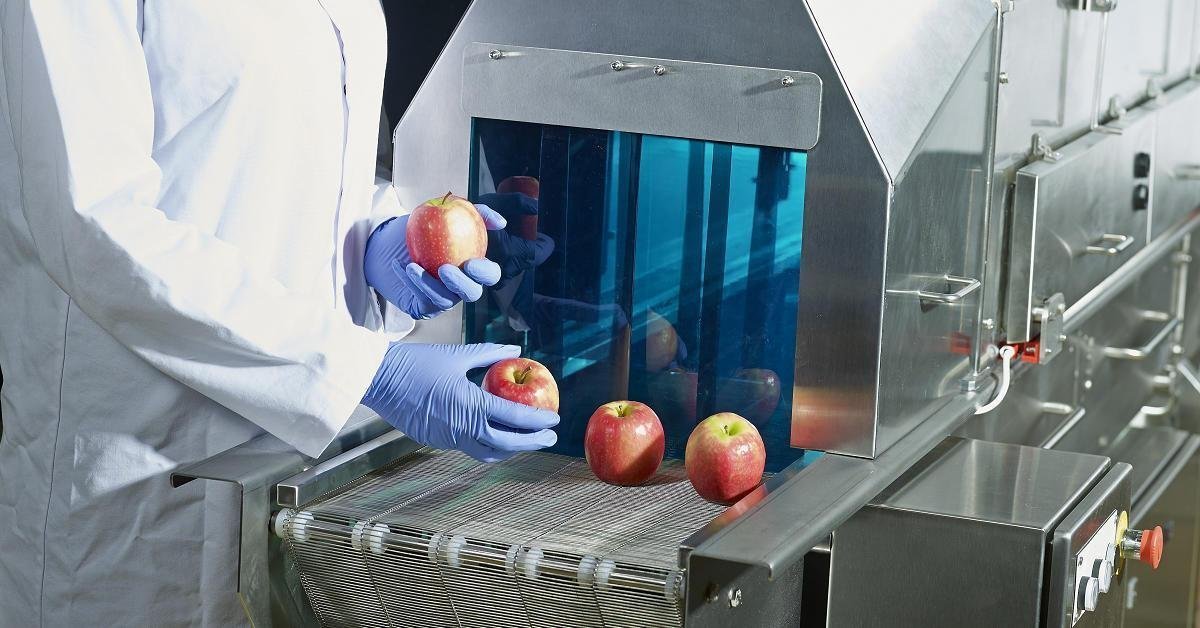

As global supply chains grow more intricate and consumer expectations for transparency continue to rise, food safety has become one of the most pressing challenges in modern manufacturing. Ensuring consistency, traceability, and contamination control requires more than routine inspections — it demands a smarter, technology-driven approach that redefines how safety is managed across the industry.
The latest generation of food safety innovations is reshaping how producers, processors, and distributors protect public health. Advanced tools like artificial intelligence, IoT systems, blockchain, and DNA barcoding are helping organizations identify risks faster, maintain higher standards, and build greater trust throughout the food ecosystem.
Smarter Detection Through Data and AI
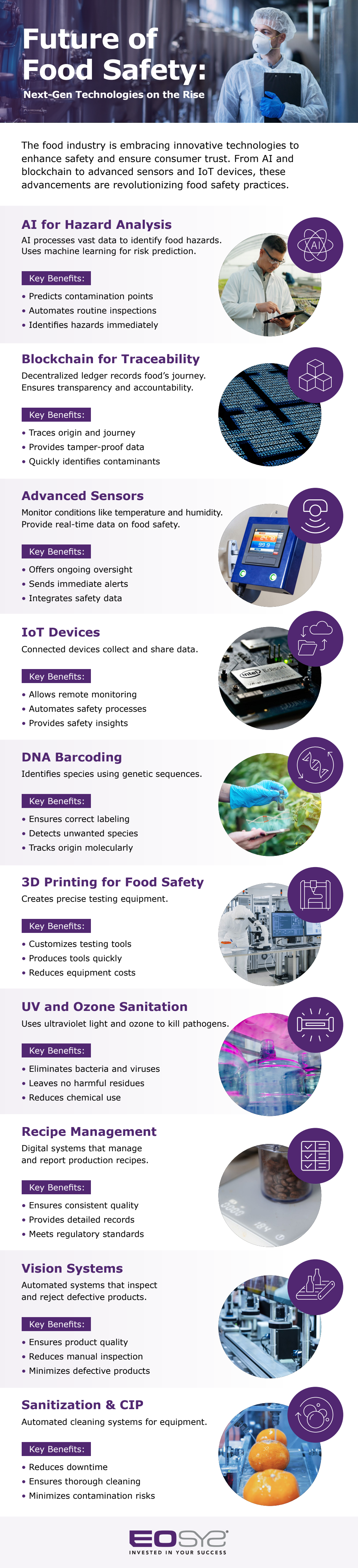
Artificial intelligence is transforming hazard detection and prevention. Using data analytics and machine learning, AI-powered systems can identify risk patterns, automate inspections, and predict potential contamination points long before they escalate. This proactive approach reduces dependency on manual monitoring and enables faster, data-backed decision-making.
Blockchain technology further enhances safety by improving traceability. Each transaction or transfer in the supply chain is securely recorded, creating an unalterable, transparent history of a product’s journey from origin to point of sale. In the event of contamination, blockchain makes it possible to pinpoint the exact source in real time, drastically reducing recall times and minimizing waste.
Real-Time Oversight With Connected Devices
IoT (Internet of Things) sensors and smart monitoring systems are providing continuous oversight across processing and storage environments. By tracking critical factors such as temperature, humidity, and sanitation conditions, these devices allow food manufacturers to maintain safety thresholds with precision. Instant alerts help teams act before minor fluctuations turn into costly safety violations.
Meanwhile, automation and advanced robotics are minimizing human contact and reducing contamination risks in production environments. Automated inspection systems equipped with cameras and machine vision can detect packaging flaws, foreign objects, or irregularities at speeds unmatched by manual methods.
Precision and Verification Through DNA and Emerging Tech
DNA barcoding technology is bringing a new level of accuracy to food identification. By analyzing genetic material, it can verify species, confirm labeling accuracy, and detect product substitutions — a breakthrough particularly valuable in sectors like seafood, meat, and specialty ingredients.
Other innovations are also reshaping sanitation and testing. UV-C and ozone-based disinfection systems are providing chemical-free methods to kill bacteria and viruses on surfaces, while 3D printing is allowing manufacturers to create customized testing and safety equipment faster and at lower cost.
Integrated Systems for Smarter Operations
When paired with industrial automation solutions, these technologies work together to form a cohesive, automated safety ecosystem. Integrated software platforms can synchronize recipe management, cleaning schedules, and real-time environmental monitoring, ensuring compliance while improving operational efficiency. Automated clean-in-place (CIP) systems, for example, enable thorough sanitation between production runs with minimal downtime or manual labor.
Building the Future of Food Safety
The shift toward technology-driven food safety isn’t just about meeting regulatory requirements — it’s about reimagining how the food industry operates. By embracing digital tools and intelligent systems, manufacturers can prevent contamination, reduce waste, and respond faster when issues arise.
Innovation in this space will continue to shape a more transparent, efficient, and resilient food supply chain. The next era of food safety belongs to those who combine science, technology, and strategic integration — not only to comply with standards but to elevate them.
Comments are closed.